
Rootbound Crossing
Follow the roots upstream
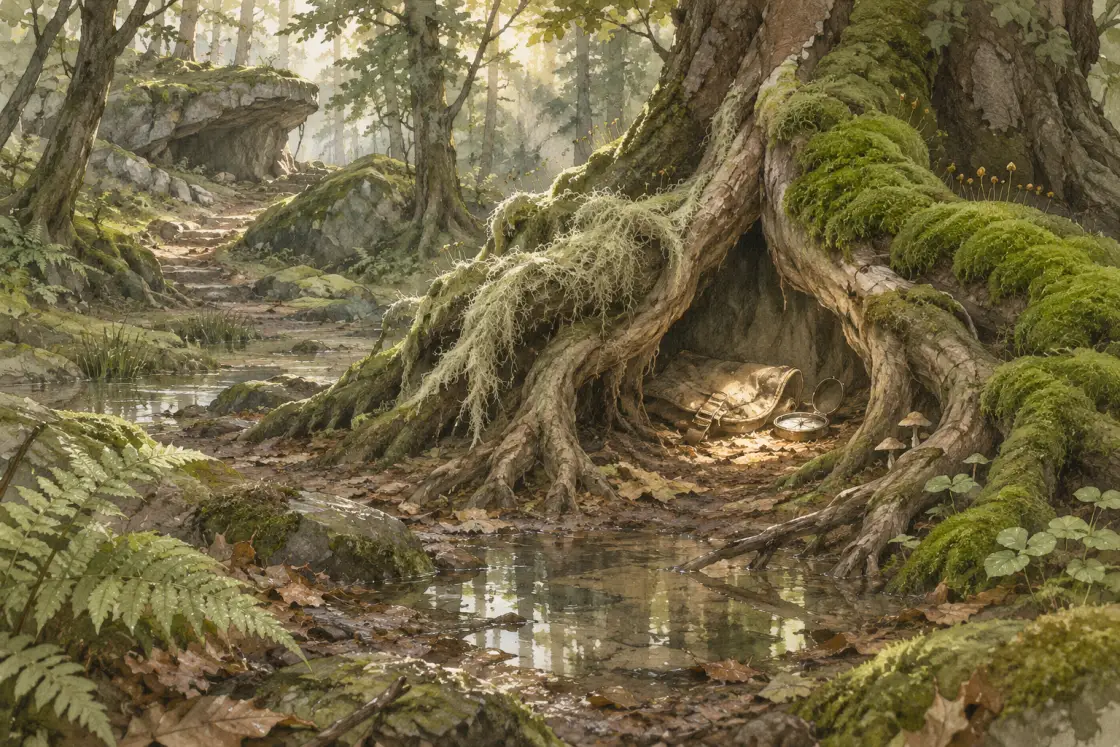
The root crossing spans two very different patches of woodland. On the open bank, water moves quickly and the roots carry a clear sound. Beneath the canopy, old roots hold shallow pools between the trees. The ranger can sense both places, but the louder sign is not necessarily the one that identifies the problem.
Plan the next move
Visit a listening point, write down a clue and find a second place that could confirm it. Follow the waterline past the old marker rather than treating the nearest whisper as a waypoint. When the two readings support an intervention, test a small repair. Return later and compare the same signs in the same order.
World and visual direction
Layered greens distinguish canopy depth, moss growth and old wood. The listening sites are recognisable by large root shapes, with a few close details that matter once the ranger approaches. Sound descriptions and visual ripples present the same change in different ways.
What the design has to explain
We want the player to explain a result before collecting the reward for it. If a whisper becomes quieter after restoring a marker, the journal should help tell whether the repair redirected the sound or whether the water simply dropped. A known baseline makes that difference discoverable.
Development status
Rootbound Crossing is an unreleased concept. The design studies focus on how to make a second visit feel productive even when the correct decision is to leave the grove alone.
Return to the same forked root
A fallen branch lies across the lower channel. It makes a good landmark and catches enough leaves to change how water reaches the next pool. A ranger arriving in the afternoon may hear a clear note upstream and silence below the branch. Record the direction, where the ranger stood, and whether the water was rising before deciding that the branch caused the change.
On the return visit, stand at the same forked root. If the waterline has moved but the upstream reading is steady, look for a point between that root and the branch. The extra station gives the player a way to test the location of the change without treating the first observation as a mistake. A visual comparison should still make sense if the player uses captions for the audio clues.
Once there is enough evidence to try an intervention, clear only the smaller pile of leaves and leave the branch in place. The change is reversible, and the ranger can learn whether the channel responds before attempting a larger repair. We want the journal to show the observation that led to this experiment and the later reading that justified keeping it. The quiet of the forest is part of what makes these small changes worth noticing.
The return route should remain easy to recognise when the forest is wet. Retaining a stable landmark makes the second reading about the crossing rather than about finding the path.
See The Silent Grove for another design study, or read the related development note.