
What a Grove Sounds Like Before It Heals
November 11, 2026
The ranger listens before choosing where to intervene. An intact grove has layers of sound: canopy birds, running water and faint root whispers. In a damaged grove, losing one layer can provide a more precise clue than a marker on the map.
A restoration encounter begins beside a cracked totem. The nearby stream still runs, so the ranger follows the missing canopy sound uphill. Sound cues have visible counterparts in the environment so the trail can be followed without headphones.
Listen before naming a cause
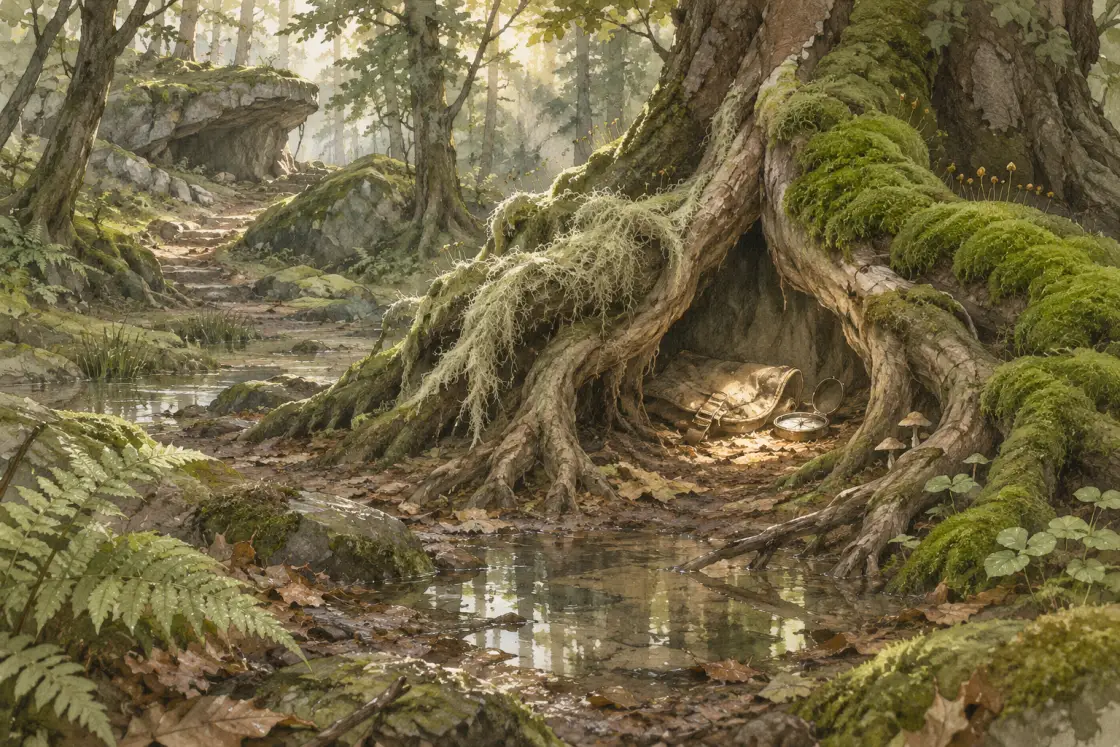
Set the first listening station on dry ground, where the crossing is visible but the pool is not. At the second station the ranger can see water among the roots and hear a softer rhythm. Those readings suggest different things depending on where the ranger stands. We want the notebook to keep the observation location as carefully as the sound.
Compare the first readings
When the pool drains, the quiet patch may move rather than disappear. Leave the marker alone on the first return visit and see which sound changed anyway. That observation gives the player a reason to delay a repair instead of assuming that every difference came from the totem.
The visual version of a listening clue needs a stable comparison. An animated ripple can show direction, but a still mark or caption is easier to consult later. Make both views point to the same root and let the journal preserve what the player observed there.
Keep a record from the dry bank
A ranger who starts by the water may describe the sound as the normal voice of the crossing. Another who begins under the larger roots hears the same sound through a denser cover of leaves. Put both viewpoints in the notes so a player can tell which reading came from a dry bank. The location gives the sound an ordinary explanation to test before interpreting it as a failing marker.
Add a weather change without changing any object in the grove. Water reaches a shallow channel and one branch begins to carry sound farther. A fixed comparison near the old stone can show the new flow. The ranger should have a reason to revise the idea that the marker is failing without being told that the earlier reading was wrong.
The next prototype can use a text equivalent for an auditory clue. It should describe the direction and rhythm that matter rather than simply saying that a sound occurred. Compare the text with the visual mark at the same spot. If a player using one mode draws a different inference from a player using the other, we should check which part of the evidence each mode made available.
Another trial starts at a stone farther from the pool and listens in the same direction. If a sound disappears there as well, the water beside the first root may not explain the whole pattern. Keep the two records as a pair. The player can then choose a third station based on which explanation is still possible. The site illustration can mark the two viewpoints in a broad view of the grove while the journal preserves the detail heard at each one. That gives both artefacts a role.
On the printed map, place a small description of each reading beside its source. Someone should be able to follow the comparison without using headphones or mistaking a louder drawing for a stronger observation.
Explore Rootbound Crossing for the design context, or read the next study for a related decision.