
A second visit to Rootbound Crossing
November 11, 2026
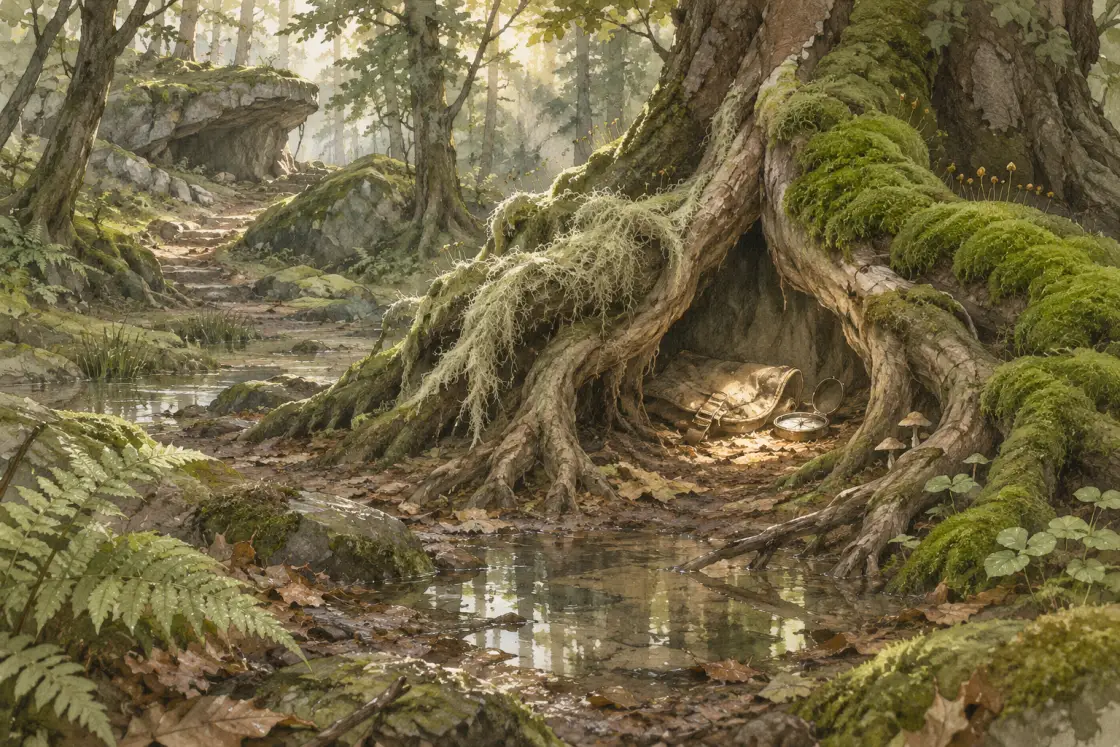
After the rain, the lower bank at Rootbound Crossing looks like an uninterrupted strip of silt. The older route is easier to see from the far side, where two roots bend around the same stone.
Our investigation starts with that mismatch. The ranger can cross, compare both banks and return to the place where the old path first diverged. The journal records a description of the root bend so it remains useful when water levels change.
For the return survey, we are checking whether players recognise the crossing from the description alone. If they rely on a map pin instead, the landmark needs a clearer outline or a better approach angle.
A second visit needs a fixed point
On the first walk, pick a root which crosses the water at a visible angle. The bank can look different after rain, but the angle gives the ranger a reference. On the return, find that root before checking the totem. A change that looked large from the new path may be small against the old mark.
Check the second view
We can compare two ways of showing the earlier state. A faded tracing gives the player an immediate impression. A written note preserves the exact observation without requiring the same camera angle. Testing both can show whether the ranger needs a visual overlay, a better journal prompt, or a clearer fixed landmark.
The most useful outcome is a decision about what to inspect next. If the water rose while the root sound stayed the same, a second station uphill may rule out the pool as a cause. The return visit can end with a sharper question even when it does not identify a repair.
Separate the return route from the first interpretation
The first visit might end with a note that the crossing sounds different downstream. It should also record where the ranger stood and which root marked the start of the walk. When rain changes the surface, that second piece of information lets the player rebuild the route without relying on the first interpretation. The notebook is useful even if the hypothesis has to be discarded.
During a replay, put the ranger on the opposite side of the pool and ask which detail helps them find the same observation point. A forked root visible from both sides is a good candidate. A reflection can be clear from one side and almost invisible from the other. The two clues can coexist if the record indicates which one provides position and which one shows the water.
A follow-up study keeps the marker unchanged and gives the ranger two possible listening stations. If both show a similar change, the cause may be farther upstream than the crossing. If only one changes, the difference is a useful next target. That makes the second visit an opportunity to narrow a question. It also teaches the player how to plan a third visit when a repair is still premature.
Record one detail that did not change between visits. The steady sound at the upper root or the same notch in the stone can help explain why the ranger trusts the new water reading. A log that only records differences may make every visit sound like a new event. The stable observation turns the notes into a comparison that another ranger could repeat.
The same bank should remain legible even if a familiar reflection is gone by the time the ranger comes back.
Explore Rootbound Crossing for the design context, or read the next study for a related decision.